CyberThéâtre / Nirvanet — A New Accessible Archive of the Key People Behind a Web 1.0 Legend

Lurch Productions is pleased to announce a new archival video dedicated to CyberThéâtre and Nirvanet, two pioneering projects from the Web 1.0 era that helped shape a unique moment in Belgian and European digital culture.
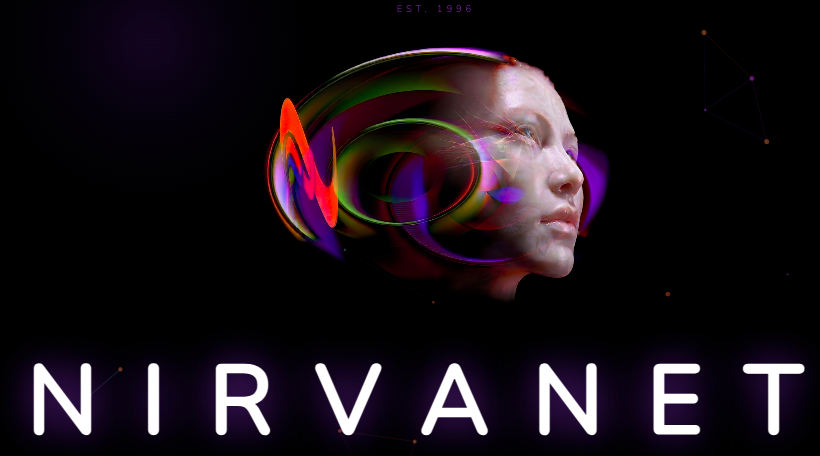
For many years, the story of CyberThéâtre and Nirvanet has remained difficult to access.
There were old articles.There were memories.There were scattered videos.There were long recordings.There were personal testimonies.There was my book.
But there was no simple, accessible way to enter the story through the voices of the people who lived it.
This new video changes that.
It brings together a compilation of testimonies from around ten people connected to the CyberThéâtre and Nirvanet team — what I have sometimes called “two hands” of witnesses, builders, contributors and memory-carriers.
What Was CyberThéâtre?
CyberThéâtre was not just a cybercafé.
It was a former Brussels cinema transformed into a hybrid cultural and technological space at the end of the 1990s. It combined Internet access, giant screens, music, live events, VR, computer games, audiovisual experimentation, corporate events, artistic encounters, restaurant/nightclub life and the atmosphere of a real physical community discovering the web together.
At a time when most people still understood the Internet as something abstract, CyberThéâtre tried to make it visible, social, embodied and spectacular.
It was a place where digital culture became a room.
What Was Nirvanet?
Nirvanet was the online counterpart of that world.
It gathered early cyberculture, music, image, video, digital resources, community publishing and experimental media into a web platform that was unusually ambitious for its time.
Nirvanet was connected to sound, visual culture, video, new media, electronic music, web publishing and the idea that online communities could generate their own living culture.
Together, CyberThéâtre and Nirvanet formed a bridge between two worlds that were still trying to understand each other:the physical cityand the emerging web.
Why This Video Matters
The problem with early Internet history is that much of it was never properly archived.
Many of the people who built the culture of the first web were too busy inventing it to document it. Websites vanished. Companies disappeared. Technologies changed. VHS tapes, CDs, old servers, flyers and memories became fragile traces.
CyberThéâtre and Nirvanet deserve better than disappearance.
They were part of a moment when Brussels briefly became one of the laboratories of European cyberculture — a place where nightlife, art, web publishing, corporate technology, digital experimentation and community imagination collided.
This video is an attempt to gather that memory.
Not perfectly.Not completely.But accessibly.
The Books
This video also connects to my book:
CyberThéâtre et Nirvanet: Les 2 phénix du web1.0 — témoignages
Available here:
The book was built around testimonies from people connected to both projects. To my knowledge, it remains one of the only dedicated works focused specifically on CyberThéâtre and Nirvanet.
That fact is meaningful, but also troubling.
A project of this importance should not have so few accessible historical sources.
CyberThéâtre 2.0 - Le Virtual Palace d'Eric Vauthier
This video is therefore presented as an archival tribute. Reproducing the atmorsphere, and even projecting in phoenxing the project - virtually with Baptiste, Eric and François - and in reality with the VIrtual Palace, also attemptively preCog-documented here: https://www.amazon.in/Virtual-Palace-CyberTheatre-Génération-French-ebook/dp/B0DQYSNZ82 thanks to Eric Vauthier, key player in the CyberTheatre with La Rétine du Plateau non-profit.
A DIY Brochure of the original CyberTheatre Avenue 1.0
You can find a DIY brochure of the CyberTheatre (not an original one) here: https://drive.google.com/file/d/1tOA6hxj4WnbGAHtRql8CTzJfPSEZZkVR/view?usp=drive_link
A Tribute to the Team
This video is therefore a tribute.
A tribute to the people who worked on CyberThéâtre.A tribute to the people who built and fed Nirvanet.A tribute to those who carried the technical infrastructure, the cultural vision, the artistic energy, the event production, the web design, the music, the community and the madness of trying to build a piece of the future before the future had a stable language.
It is also a tribute to figures such as Philippe Brawerman, Christian Perrot, Marie-France Perez and the broader constellation of people who made the experiment possible.
For me personally, this also belongs to a larger Lurch Productions line: the preservation of “technofathers” and formative figures whose work helped shape my own artistic, technological and entrepreneurial imagination.
Philippe Brawerman and the CyberTheatre / Nirvanet story belong to that lineage.
From Long Archive to Accessible Entry Point
The previous available material was often too long, too dispersed or too hard to approach. A half-day-long archive may be historically precious, but it is not always accessible to a wider public, although 5 hours long...
This new compilation is meant to become an entry point.
A door.
A first map.
A way for viewers, researchers, former participants, digital culture historians and younger generations to understand why CyberThéâtre and Nirvanet mattered.
Watch the Video
This is not the final word on CyberThéâtre and Nirvanet.
It is the beginning of a more accessible archive.
A way to gather memory before it dissolves.
A way to say that Web 1.0 was not only code, browsers and modems.
It was also rooms, faces, music, ambition, mistakes, friendships, screens, bodies, dreams and people trying to build the future with the tools they had.
Compiled and presented by François / Gabriel Wayenberg Lurch Productions Creative Studio


Comments